

The Bird’s Word Blog
What Okinawa Taught Me About Living Better
Exploring Longevity in Okinawa, a Blue Zone
 When I visited Okinawa in 2024, I arrived knowing that people here are well-known for living particularly long lives. Okinawa is one of the five original Blue Zones, places recognized for exceptional longevity and healthy aging. Researchers have spent decades studying possible reasons, including diet, movement, social relationships, purpose, genetics, and spiritual practices.
The Blue Zones framework takes some of those observations and organizes them into nine lifestyle patterns known as the Power 9. At a basic level, they are about moving naturally and having a sense of purpose; finding ways to reduce stress; eating mostly plants, eating until you are satisfied rather than full, and enjoying alcohol moderately; and maintaining strong connections to family, friends, faith, and community. Blue Zones gives those nine ideas the names Move Naturally, Purpose, Downshift, the 80% Rule, Plant Slant, Wine at 5, Belong, Loved Ones First, and Right Tribe.
I had read about these ideas before I arrived. It was much more interesting to see what some of them looked like in the context of Okinawan life: walking village paths, watching fishermen pull in their nets before breakfast, harvesting sugarcane and vegetables, cooking with local ingredients, meeting artisans, and listening to people talk about ancestors and traditions that remain important in their communities.
My experience over a few days was certainly not a scientific study of Okinawan longevity, nor did every encounter fit neatly into one of nine categories. But it gave me a much better understanding of the ideas behind the framework and, more importantly, plenty to think about in my own life.
#1 – Move Naturally: Movement With a Reason
 One of the Blue Zones principles is to “move naturally.” In Okinawa, we walked stone-paved roads in Shuri and trails through Yanbaru, harvested sugarcane and other vegetables, and watched fishermen do the physical work of bringing in their morning catch. Movement often had a practical reason attached to it.
That felt different from thinking about exercise as a separate activity that has to be added to an already full day. It made me consider how much movement can simply come from walking somewhere, tending something, working with our hands, or choosing to do more of the ordinary things that require us to use our bodies.
#2 – Purpose: Having a Reason to Participate
 The Japanese concept of ikigai, often translated as a reason for being, comes up frequently in discussions of Okinawan longevity. I expected “purpose” to be a much bigger, more philosophical idea than it sometimes looked in practice.
Elders tended gardens. Artisans continued practicing their crafts. Local guides shared knowledge about their communities and culture. What I saw were people with skills, responsibilities, interests, and reasons to remain involved. It made purpose seem less like one grand calling we are supposed to discover and more like continuing to have something worthwhile to contribute.
#3 – Downshift: Letting Things Take the Time They Take
Blue Zones uses “downshift” to describe habits that help reduce stress. During my time in Okinawa, I kept noticing activities that could not simply be made faster.
Artisans worked with materials that took time to cultivate and prepare. Conversations had room for pauses. We spent time by the sea and forest bathing in Yanbaru. Okinawa certainly has deadlines, traffic, smartphones, and the pressures of modern life, so I would not romanticize it as a place where nobody rushes. What my visit did make me question was how often I treat speed and efficiency as automatically better.
#4 – The 80% Rule: Enough Can Be Enough
 The Blue Zones framework includes the “80% Rule,” based on the Okinawan idea of hara hachi bu, or stopping eating before feeling completely full. I cannot say that I watched people consciously practice a rule at the table, but I did notice that portions were generally modest while meals still offered plenty of variety.
That interested me because nothing about the food felt deprived. There were different flavors and ingredients to try, and meals were satisfying without excess being the point.
#5 – Plant Slant: Food With a Place and a History
 “Plant Slant” refers to the emphasis on plant foods found in traditional diets across the Blue Zones. Vegetables were certainly prominent in the meals and food experiences I had in Okinawa. We shopped for ingredients at farmers markets and local purveyors, harvested produce ourselves, and cooked alongside a Ryukyuan cuisine chef.
What interested me most was not identifying a handful of “longevity foods” to buy when I got home. Ingredients had context. They connected us to Okinawa’s agriculture, climate, culture, and history. Each dish had its own flavors and story, and the experience made me more interested in understanding where food comes from and how it became part of a cuisine than in trying to reproduce an Okinawan diet from a checklist.
#6 – Wine at 5: Enjoyment Without Excess
 The Blue Zones framework calls its moderate-alcohol principle “Wine at 5.” In Okinawa, however, the traditional alcoholic drink we encountered was awamori, a distilled spirit with a long local history. Even though it wasn’t wine, the value of moderation and intention still applied.
What most caught my attention was the ritual around drinking. Awamori had a history and a place in social occasions rather than being simply another beverage to consume. People did not drink a huge amount or keep going for hours as part of these rituals.
In learning about these principles and in my observation in Okinawa, I didn’t get the sense that the lesson to take away is that anyone needs to drink alcohol to live longer. What interested me was the broader idea of enjoyment with awareness and restraint.
#7 – Belong: Faith, Ancestors, and Continuity
 “Belong” refers to participation in a faith or spiritual community. Spirituality in Okinawa was one of the parts of the trip I found most thought-provoking. We visited sacred places and heard about ancestral tombs, village shrines, prayers, and traditions that have been passed down for generations.
People spoke about ancestors as a continuing presence rather than as figures confined to the past. That gave belonging another dimension for me. It was not only about the people living around you now, but also about knowing where you came from and maintaining a relationship with generations that preceded you.
#8 – Loved Ones First: Relationships Across Generations
“Loved Ones First” is the Power 9 principle centered on keeping family relationships important throughout life. I was not in Okinawa long enough to make sweeping observations about family life, but I did see how frequently activities involved other people and how knowledge moved between generations.
Meals were shared. Tasks were done together. Elders continued to participate. Traditions and skills were passed along rather than treated as belonging only to the past. It was a reminder that healthy aging is not necessarily something an individual does alone.
#9 – Right Tribe: The People Around Us Matter
 “Right Tribe” refers to maintaining a circle of people who support healthy habits and one another. Throughout our trip, guides, farmers, artisans, hosts, and other local people created the connections that made our experiences possible. Much of what we learned came through people willing to spend time with us and share something they knew.
Something happened within our own traveling group, too. Shared meals, new experiences, time outside, and the inevitable surprises of travel gave us reasons to talk, laugh, ask questions, and rely on one another. It reminded me how quickly people can form connections when we make time to do things together.
One More Thing I Kept Noticing
 There was one part of my Okinawa experience that I could not fit neatly into the Power 9, but it feels important to mention as unique to the location and culture.
The natural environment kept showing up in the way people worked and created. We encountered it in fishing and farming, forest stewardship, handmade tools, and the local materials artisans used in jewelry, textiles, sculpture, and other art. In Yanbaru, conservation made the relationship especially clear: the forest was habitat, livelihood, source material, and something people had a responsibility to care for.
What interested me was how practical that relationship with the natural environment could be.
What Okinawa Taught Me About Living Well
I did not return from Okinawa with a foolproof plan for living to 100, but I did get some great ideas for how to improve my way of living for a higher quality, more meaningful life on a day-to-day basis. Okinawa’s long-lived residents grew up within a particular culture, history, environment, and set of relationships. We cannot copy a few habits and assume we will reproduce the exact same results.
I also came home reflecting upon better questions to improve my personal wellness. How can I make movement a more natural part of my day? Who am I sharing meals with? What gives me a reason to keep contributing and learning? Which relationships am I actively tending? Where could I let something take a little more time?
Okinawa gave me plenty to consider, question, and reflect upon once I made it home. If this trip taught me anything, it’s this: A long life isn’t built all at once. It’s built slowly, lovingly, day by day.
Frequently Asked Questions About Okinawa & Blue Zones
 Why is Okinawa known for longevity?
Okinawa has a long history of exceptional longevity, particularly among its older generations. Researchers have studied a range of possible influences, including diet, physical activity, genetics, social relationships, purpose, and psychological and spiritual practices.
What is a Blue Zone?

The term Blue Zones refers to five original regions associated with exceptional longevity: Okinawa in Japan, Sardinia in Italy, Ikaria in Greece, the Nicoya Peninsula in Costa Rica, and Loma Linda in California.
What are the Blue Zones Power 9?
The Power 9 are nine lifestyle patterns identified across the original Blue Zones: Move Naturally, Purpose, Downshift, the 80% Rule, Plant Slant, Wine at 5, Belong, Loved Ones First, and Right Tribe. In simpler terms, they focus on everyday movement and purpose, managing stress, eating habits, and maintaining strong family, social, and spiritual connections. They are observations about long-lived communities, not a guaranteed formula for living to 100.
Can travelers learn about longevity in Okinawa?

Travelers can experience many of the cultural traditions and parts of daily life that have made Okinawa such an interesting place for longevity research, but they are best understood in their Okinawan context.
Journeys International’s Living to 100: Okinawa Island adventure introduces travelers to Okinawa through local fishermen, farmers, cooks, artisans, guides, villages, and the natural environment, while also exploring its distinct Ryukyuan history and traditions. The point is not to go looking for one secret to reaching 100, but to understand the place and its people more fully and consider what ideas might be useful in our own lives. Check out our itinerary and get in touch if you’d like to explore planning a custom adventure into Okinawa for yourself.
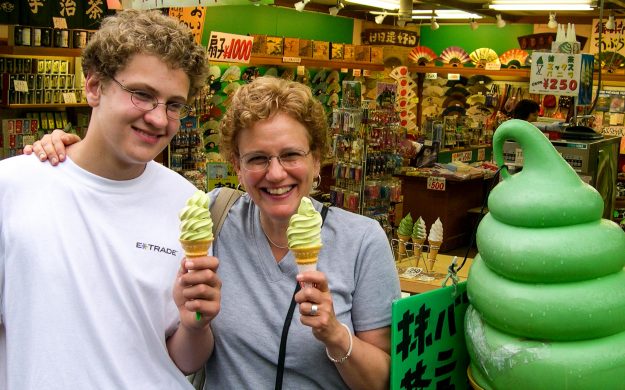
Family-friendly Japan
Japan is a spectacular dynamic destination for the entire family. Experience the profound traditions and the 21st century energy. Join a group in summer or visit on your dates. Early April is cherry blossom time!
From $7900 Per Person
Gentle
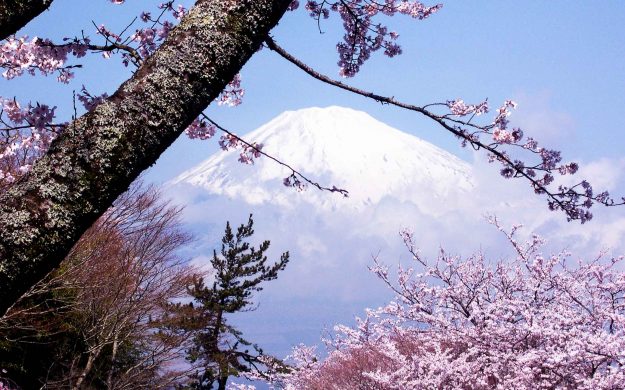
Classic and Festive Japan
Take in Japan's highlights and contrasts, and meet the Japanese as they welcome you with open arms. If you go in May, you'll witness Aoi Matsuri, and elaborate festival in Kyoto showcasing hundreds of people in grand imperial court costume.
From $9600 Per Person
Gentle

Design an adventure with Journeys International!
With over 40 years of experience, we create experiences that match your goals.
Start Planning

